

Cart
0
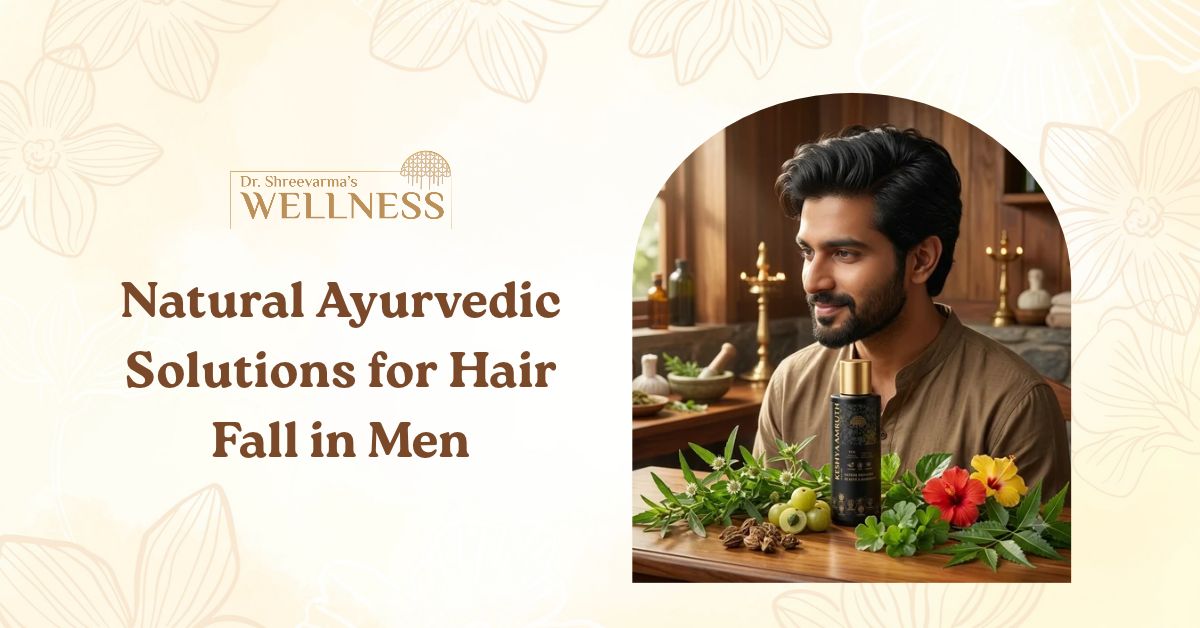
Hair fall is a common concern among men, particularly as they get older. Finding extra hair on the pillow, noticing a widening hairline, or seeing more scalp while looking in the mirror can be worrying. Although some daily hair shedding is normal, persistent or progressive hair loss deserves attention.
Male hair loss can have several causes. Genetics, hormonal factors, age, nutritional deficiencies, illness, stress, certain medications, scalp conditions, and lifestyle factors can all contribute. The most common cause is androgenetic alopecia, commonly known as male pattern hair loss. It often appears as a receding hairline, thinning at the crown, or gradual reduction in hair density.
For men interested in natural wellness approaches, Ayurveda for male hair loss offers a traditional perspective that focuses on scalp care, lifestyle, nutrition, herbal preparations, and overall well-being.
Ayurvedic hair care can be incorporated into a healthy routine, but it is important to understand that not every type of hair loss has the same cause. Herbal products should therefore be viewed as complementary hair-care options rather than guaranteed treatments for baldness or hereditary hair loss.
Understanding Hair Fall in Men
Before exploring hair regrowth Ayurveda, it is useful to understand why hair loss happens.
The hair growth cycle consists of different phases. Hair follicles periodically grow, rest, and shed. Losing some hair every day is normal. Problems can arise when excessive shedding occurs or when follicles gradually become smaller and produce thinner strands.
According to the American Academy of Dermatology, hereditary hair loss is the most common cause of hair loss, and male pattern hair loss can begin as a receding hairline or bald spot on the top of the scalp.
Other possible causes include:
- Nutritional deficiencies
- Sudden weight loss
- Prolonged stress
- Illness or fever
- Thyroid disorders
- Certain medications
- Scalp infections
- Autoimmune conditions
- Excessive chemical treatments
- Tight hairstyles
- Poor scalp health
Because the causes differ, identifying the underlying reason for hair fall is an important first step.
What Is Ayurveda for Male Hair Loss?
Ayurveda for male hair loss focuses on maintaining overall wellness and supporting healthy hair and scalp through traditional practices.
Ayurvedic approaches to hair care commonly include:
- Herbal oils
- Traditional herbal formulations
- Scalp massage
- Balanced nutrition
- Regular sleep
- Stress management
- Healthy daily routines
- Gentle scalp cleansing
Traditional Ayurveda considers hair health in relation to broader physical balance rather than treating the hair shaft alone.
This holistic perspective can be useful for men who want to develop a consistent herbal hair care routine.
However, Ayurvedic hair care should not be presented as a guaranteed cure for androgenetic alopecia. Modern dermatology has established treatments for male pattern hair loss, and early evaluation can be particularly useful because treatment may help slow progression and preserve existing hair.
Common Signs of Male Hair Loss
Hair loss does not always begin with obvious baldness. Early signs can include:
Receding Hairline
The hairline may gradually move backward, particularly around the temples.
Thinning Crown
Some men first notice reduced density around the crown or vertex of the scalp.
Increasing Hair Shedding
You may notice more hair than usual on your pillow, clothing, comb, or shower drain.
Thinner Hair Strands
Individual hairs may gradually become finer, making the scalp more visible.
Widening Scalp Visibility
Hair may appear less dense even when there is no obvious bald patch.
Recognizing changes early can make it easier to determine the cause and explore suitable treatment or hair-care options.
How Herbal Hair Care Can Support a Healthy Routine
Herbal hair care has been used traditionally for generations. Ayurvedic hair oils and herbal preparations are commonly incorporated into scalp massage and hair-care routines.
The purpose of a hair-care routine should not simply be to stop shedding overnight. Instead, consistent care can help maintain scalp cleanliness, reduce unnecessary hair damage, and support the condition of existing hair.
A simple routine may include:
- Gentle scalp cleansing
- Appropriate oiling
- Avoiding excessive heat styling
- Limiting harsh chemical treatments
- Maintaining adequate nutrition
- Getting sufficient sleep
- Managing stress
- Seeking professional evaluation for persistent hair loss
Recent reviews of herbal approaches to hair loss have identified potential benefits from several plant-based ingredients, but they also emphasize limitations such as small studies, short follow-up periods, inconsistent formulations, and the need for larger clinical trials.
Ayurvedic Hair Oils and Scalp Massage
Hair oiling is one of the most recognizable traditional Ayurvedic hair-care practices.
A gentle scalp massage may make hair care more relaxing and can help distribute oil across the scalp and hair.
When using an Ayurvedic hair oil:
- Use the quantity recommended for the product.
- Massage gently rather than scratching the scalp.
- Avoid aggressive rubbing when hair is wet.
- Wash according to your hair and scalp requirements.
- Stop using a product if you develop irritation or an allergic reaction.
Oil massage should be considered a hair-care practice rather than a guaranteed method for reversing genetic hair loss.
Hair Regrowth Ayurveda: What Does the Evidence Say?
The phrase hair regrowth Ayurveda is increasingly searched by men looking for natural alternatives for thinning hair.
Ayurvedic and herbal ingredients are being studied for their potential effects on hair growth. Research has explored ingredients including amla, bhringraj, rosemary, saw palmetto, pumpkin seed oil, ginseng, and other botanical preparations.
A recent review of herbal remedies for hair loss found promising results for several herbal ingredients, but also highlighted limitations in the available evidence and the need for better-designed randomized clinical trials.
Research is also emerging specifically around traditional Ayurvedic polyherbal hair oils. A recent randomized, double-blind clinical study evaluated a Neeli Bhringadi-based polyherbal hair oil in adults with androgenetic alopecia, hair fall, and premature hair graying. Such studies are useful, but individual formulations and study findings should not automatically be generalized to every Ayurvedic hair product.
Therefore, men should approach claims of guaranteed or permanent hair regrowth with caution.
Ayurvedic Herbs Commonly Associated With Hair Wellness
Several herbs are traditionally associated with Ayurvedic hair care.
Bhringraj
Bhringraj is one of the best-known herbs in traditional Ayurvedic hair-care formulations. It is commonly used in oils and preparations designed for scalp and hair wellness.
Amla
Amla, or Indian gooseberry, is traditionally valued for its nutritional and antioxidant properties and is widely incorporated into Ayurvedic hair preparations.
Brahmi
Brahmi is traditionally associated with wellness and is included in some Ayurvedic scalp and hair formulations.
Neem
Neem is commonly used in traditional personal-care practices and may be incorporated into scalp-care preparations.
Hibiscus
Hibiscus is another botanical traditionally used in hair oils and masks.
The presence of an herb in a traditional formulation does not automatically establish that it can reverse male pattern baldness. The quality, concentration, formulation, manufacturing process, and evidence behind the finished product all matter.
Nutrition and Hair Health
Healthy hair growth also depends on adequate nutrition.
A diet that provides sufficient protein, iron, zinc, vitamin D, B vitamins, healthy fats, and other nutrients supports overall health. However, supplements should not be taken unnecessarily.
Nutritional deficiencies can contribute to certain forms of hair shedding, but excessive supplementation can also be harmful.
If hair fall is sudden or unusually severe, a healthcare professional may recommend evaluation for nutritional or medical causes.
Indian expert consensus on androgenetic alopecia has noted that nutritional supplementation has a more limited role in male pattern hair loss than in hair loss associated with nutritional deficiency or telogen effluvium.
Stress, Sleep and Male Hair Fall
Modern lifestyles can place considerable stress on the body.
Work pressure, inadequate sleep, irregular meals, sedentary habits, and emotional stress may affect overall well-being. Some forms of temporary hair shedding can also occur after significant physical or emotional stress.
A healthy daily routine can therefore be an important part of a holistic approach to hair wellness.
Consider:
- Maintaining a consistent sleep schedule
- Practicing relaxation or meditation
- Exercising regularly
- Eating balanced meals
- Staying hydrated
- Taking regular breaks from prolonged screen use
- Avoiding smoking
- Limiting excessive alcohol consumption
Recent research has identified associations between factors such as poor sleep, smoking, alcohol use, overweight/obesity, and androgenetic alopecia, although associations do not necessarily mean that any one factor directly causes hair loss in an individual.
Dr. Shreevarma's Wellness Hair Care Products
Dr. Shreevarma's Wellness offers a dedicated Hair Care collection featuring several Ayurveda-focused products.
The current Hair Care collection lists:
- Keshya Amruth Hair Oil
- Keshya Amruth Capsules
- Keshya Amruth Tablets
- Keshya Amruth Choornam
You can explore the collection through the official Dr. Shreevarma's Wellness website:
Keshya Amruth Hair Oil
Keshya Amruth Hair Oil is listed in Dr. Shreevarma's Hair Care collection and can be considered as part of a traditional Ayurvedic scalp and hair-care routine.
Hair oiling can be incorporated into a regular grooming routine, particularly for men who prefer traditional herbal hair-care practices.
Always follow the product's recommended directions and discontinue use if irritation occurs.
Keshya Amruth Capsules
Keshya Amruth Capsules are also listed in the Hair Care collection.
Men considering an oral Ayurvedic product should review the product information carefully and follow the recommended dosage.
It is particularly important to consult a qualified healthcare professional before using supplements if you take medication, have an existing medical condition, or are already using other supplements.
Keshya Amruth Tablets
Keshya Amruth Tablets are another product listed in Dr. Shreevarma's Hair Care collection.
As with other supplements, the product should be used according to the manufacturer's instructions rather than exceeding the recommended dosage in an attempt to achieve faster results.
Keshya Amruth Choornam
Keshya Amruth Choornam is also listed as part of the current Hair Care collection.
When considering any traditional herbal preparation, men should understand its ingredients, intended use, directions, and precautions before adding it to their routine.
10 Natural Hair-Care Tips for Men
If you are interested in Ayurveda for male hair loss, combining traditional practices with good everyday hair care can help you build a consistent routine.
1. Be Gentle While Washing
Avoid aggressively scrubbing your scalp. Use gentle movements and a suitable cleanser.
2. Avoid Excessive Heat
Frequent use of very hot dryers or styling tools can contribute to hair shaft damage.
3. Avoid Tight Hairstyles
Repeated pulling or tension can contribute to traction-related hair loss.
4. Maintain Scalp Hygiene
Regular cleansing can help remove excess oil, sweat, and product buildup.
5. Avoid Excessive Chemical Treatments
Repeated bleaching, straightening, and harsh chemical treatments may damage the hair shaft.
6. Eat Enough Protein
Hair is primarily made of keratin, a protein. Adequate dietary protein is therefore important for general hair health.
7. Manage Stress
Include activities that help you relax, such as walking, yoga, meditation, or hobbies.
8. Prioritize Sleep
Aim for consistent, adequate sleep as part of your overall wellness routine.
9. Avoid Smoking
Smoking has been associated with several adverse health outcomes and has also been identified as a risk factor associated with androgenetic alopecia in recent research.
10. Address Hair Loss Early
Do not wait until substantial hair loss has occurred before seeking professional advice.
When Should Men See a Dermatologist?
Not every type of hair loss should be treated with oil or supplements.
Consult a dermatologist if you experience:
- Sudden or rapid hair loss
- Circular bald patches
- Severe scalp itching
- Scaling or inflammation
- Pain or tenderness
- Hair loss accompanied by other symptoms
- Significant thinning over a short period
- Hair loss beginning after a new medication
- Persistent shedding without an obvious cause
Conditions such as alopecia areata, scalp infections, thyroid problems, nutritional deficiencies, and androgenetic alopecia may require different approaches.
A dermatologist can examine the scalp and determine whether additional testing is necessary.
Can Ayurveda Replace Medical Hair-Loss Treatment?
For male pattern hair loss, Ayurveda should not automatically be considered a replacement for evidence-based dermatological treatment.
The American Academy of Dermatology identifies topical minoxidil and oral finasteride among established medical treatments for male pattern hair loss, with treatment decisions depending on individual circumstances.
A 2026 clinical review also concluded that evidence for many complementary nutritional, topical, light-based, and lifestyle interventions remains variable, with significant gaps in long-term and high-quality research.
This is where an integrative approach can be useful: traditional hair-care practices can be incorporated into a broader wellness routine while medical evaluation is used when the underlying cause needs diagnosis or treatment.
Creating a Simple Ayurvedic Hair Care Routine
A practical routine does not need to be complicated.
Step 1: Understand Your Hair Loss
Observe whether you are experiencing general shedding, receding hairline, crown thinning, or patchy hair loss.
Step 2: Maintain Scalp Care
Keep the scalp clean and avoid unnecessary chemical or mechanical damage.
Step 3: Consider Traditional Hair Oiling
If suitable for your scalp, incorporate an Ayurvedic hair oil according to the manufacturer's instructions.
Step 4: Support Overall Nutrition
Eat a varied, balanced diet and address confirmed nutritional deficiencies with professional guidance.
Step 5: Improve Lifestyle Habits
Prioritize sleep, physical activity, stress management, and healthy daily routines.
Step 6: Monitor Progress
Hair growth is slow. Avoid changing products constantly and expecting overnight results.
Step 7: Seek Professional Advice
If hair loss continues or progresses, consult a dermatologist or qualified healthcare professional to identify the cause.
Final Thoughts
Hair fall in men can have many causes, and understanding the reason behind the shedding is one of the most important steps toward managing it.
Ayurveda for male hair loss offers a traditional, holistic approach centered around herbal preparations, scalp care, nutrition, lifestyle, and overall wellness. Herbal hair care can form part of a regular grooming routine, while interest in hair regrowth Ayurveda continues to grow as research explores the potential role of botanical ingredients.
However, scientific evidence for herbal hair-loss remedies remains mixed. Some studies show potential benefits, but many require larger, longer, and better-controlled clinical trials.
Dr. Shreevarma's Wellness currently offers a dedicated Hair Care collection featuring Keshya Amruth Hair Oil, Keshya Amruth Capsules, Keshya Amruth Tablets, and Keshya Amruth Choornam.
View Dr. Shreevarma's Hair Care Products
For men experiencing progressive or sudden hair loss, Ayurvedic hair care can be considered alongside—not necessarily instead of—appropriate medical evaluation. A consistent routine combining gentle scalp care, good nutrition, healthy lifestyle habits, and professional guidance when needed can provide a more informed approach to long-term hair wellness.
Medical Disclaimer: This article is intended for general educational purposes and does not diagnose, treat, cure, or prevent hair loss or any other medical condition. Ayurvedic and herbal products should not be considered guaranteed treatments for male pattern baldness. Consult a qualified dermatologist or healthcare professional for persistent, sudden, or severe hair loss. If you take medication or have an existing medical condition, seek professional advice before using herbal supplements.


