

Cart
0
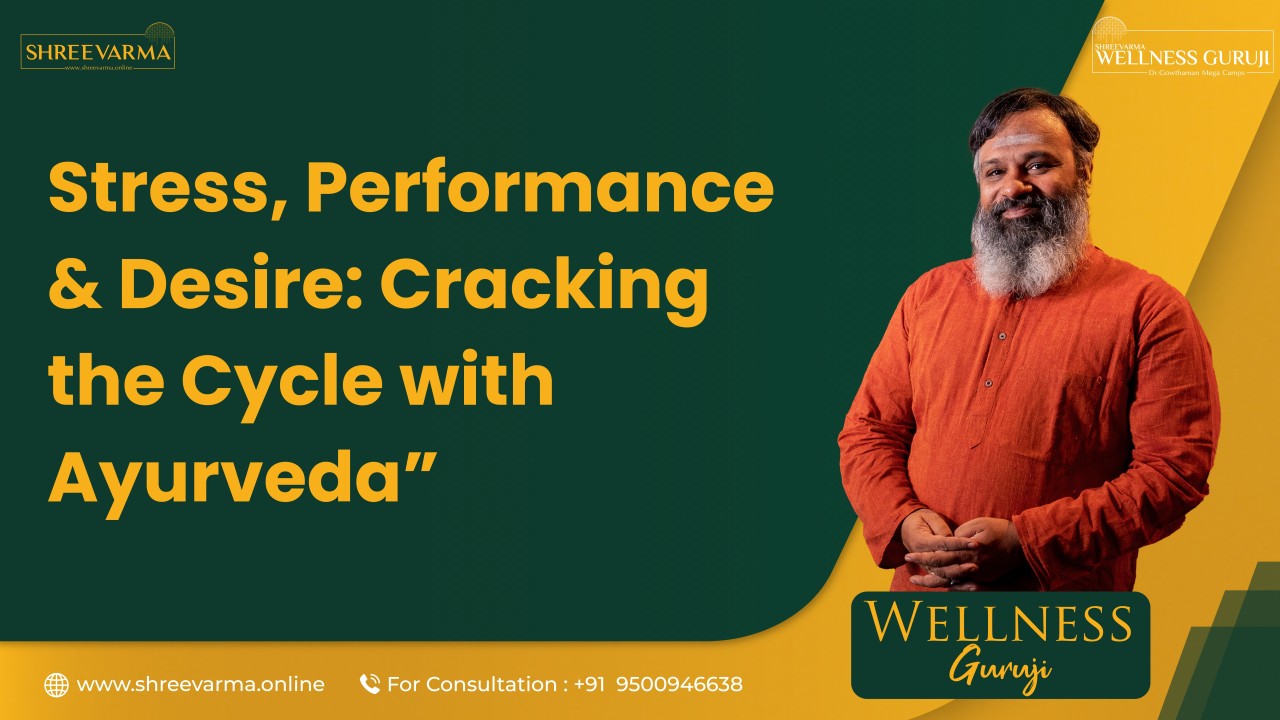
Vanakkam, friends!
I am Wellness Guruji Dr. Gowthaman, and today I want to invite you into a conversation that is both deeply personal and profoundly important. We are going to talk about stress, performance, and desire — three words that quietly shape the health, happiness, and intimacy of modern professionals.
You and I know the story well. You start your career with fire in your belly and dreams in your heart. Deadlines, meetings, long commutes, endless phone calls, and late-night screen scrolling soon become part of the routine. Somewhere along the way, your nervous system stays in “go-mode” even when the day ends. Sleep gets lighter, patience gets shorter, and intimacy — both emotional and physical — begins to fade.
Many men tell me, “Guruji, I am exhausted, my mind is racing, and my desire is missing.” Women whisper, “Doctor, I feel emotionally shut down, my body doesn’t respond the way it used to, and romance feels like another task on my list.”
This is not weakness. This is physiology under chronic stress.
⚡ Big truth: Chronic stress hijacks your brain’s reward system, alters your hormones, and silently kills libido. But the good news is — Ayurveda has mapped this cycle for millennia and offers practical, science-aligned ways to break it.
Stress is not just in your head — it’s in your hormones, your nerves, and your heart
Modern science calls it the HPA axis — the Hypothalamic-Pituitary-Adrenal system. Ayurveda, thousands of years ago, described the same thing in different language: Vāta aggravation, Ojas depletion, Pitta overheat, and Sattva decline.
When work pressure, emotional conflicts, and digital overload trigger chronic fight-or-flight, your body releases cortisol and adrenaline over and over. In the short term this keeps you sharp. But over weeks and months, your brain recalibrates:
- Dopamine (the “motivation & pleasure” chemical) drops.
- Testosterone and estrogen balance shifts.
- Serotonin rises but numbs sexual drive.
- Blood flow to sexual organs decreases because your body is prioritizing survival, not reproduction.
This is why chronic stress makes erections softer, lubrication weaker, orgasms harder to reach, and desire dull. It’s why couples who truly love each other can feel “disconnected” even when nothing is “wrong.”
Ayurveda saw this long before cortisol was discovered
The sages described Klaibya (loss of sexual strength), Alpa-Kāma (reduced desire), and Ojas kṣaya (loss of the vital essence) as outcomes of:
- Ati-chintā (excessive thinking/worry),
- Ati-vyayāma (overwork),
- Rātri-jāgaraṇa (late nights),
- Ati-rūkṣa & ati-kaṭu āhāra (too much dry/spicy food),
- Manasika duḥkha (mental distress).
Their solution? Restore Ojas, pacify Vāta, cool Pitta, build Sattva. They offered Dinacharya (daily rhythm), Āhāra (nourishing food), Rasāyana (rejuvenating herbs), Vajīkaraṇa (love-enhancing therapies), Panchakarma detox, and meditative practices to rebuild calm vitality.
🌟 Key idea: Stress shrinks desire because it drains Ojas — the subtle essence of immunity, joy, and sexual vitality. Rebuild Ojas and you rebuild intimacy.
Breaking the modern loop
Most professionals today live in what I call “high-functioning survival mode.” You perform at work but your nervous system never feels safe enough for play and passion. You might also lean on coffee, alcohol, sugar, late-night scrolling, and sometimes performance enhancers to push through — which further derails hormones.
The Ayurvedic path is not about suppressing stress with a pill. It’s about shifting the body from fight-or-flight to rest-and-rebuild, nourishing nerves, hormones, and heart, and retraining the brain to allow desire.
In the coming sections, I will take you through:
- The science of stress and sexual function (so you know it’s not “all in your head”).
- How Ayurveda explains and addresses this through the tridoṣa, Ojas, and Sattva lens.
- Daily rituals, diet, herbs, and therapies that work gently but powerfully.
- Relationship and intimacy practices that help couples rediscover closeness without pressure.
- A 14-day reboot and 90-day rebuild roadmap to bring performance and desire back naturally.
I promise — you will not just learn theory; you’ll get actionable, compassionate steps you can start today.
A compassionate reminder before we go deeper
If you are struggling with low libido, erectile dysfunction, vaginal dryness, delayed orgasm, or simply feeling disconnected from desire, you are not broken. You are experiencing a predictable physiological response to chronic stress. It’s a signal — not a shame.
Seeking help is strength. Ayurveda meets modern science beautifully here: while your doctor can check hormones or rule out medical causes, Ayurveda teaches you how to rebuild your life force and calm your nervous system at its roots.
Your first simple practice today
Before we move deeper, pause and try this:
Soothing Breath (Shamana Prāṇāyāma): Sit comfortably, exhale fully. Inhale slowly for 4 counts, hold for 2, exhale softly for 6. Repeat for 3 minutes. This calms Vāta, signals safety to the brain, and begins the Ojas-rebuilding journey.
A single calm breath can be the first crack in the cycle.
The Stress–Sex Axis in Plain Language
We often hear words like HPA axis, cortisol, neurotransmitters, and wonder how they are connected to our most intimate human feelings. Let’s strip away the jargon and speak plainly. Your brain and body run on signals — chemical messengers and nerve circuits that constantly decide: Am I safe or threatened? Is it time to survive or time to connect and create life?
When you are stressed — whether it’s a last-minute deadline, a tense conversation, financial worry, or long-term uncertainty — your brain flips a master switch. It tells the body: Survival first. Reproduction later. This is not moral, it’s biology.
The key system here is called the HPA axis:
- Hypothalamus — a small part of the brain that senses threat and releases CRH (corticotropin releasing hormone).
- Pituitary gland — the master endocrine conductor that releases ACTH (adrenocorticotropic hormone).
- Adrenal glands — tiny caps on your kidneys that flood your body with cortisol and adrenaline.
This is great when you’re running from a tiger. But when it’s happening every day because of traffic, email, deadlines, or unresolved relationship conflict, it quietly reshapes your intimate life.
What stress hormones do to desire
- Cortisol stays high. - At first, a little cortisol sharpens focus. But chronic high cortisol dulls your brain’s pleasure circuits. It blunts dopamine — the spark that drives curiosity, play, and sexual motivation. It also interferes with testosterone production in men and balanced estrogen/progesterone cycles in women. Low testosterone = low desire and weaker erections. Low progesterone = anxiety and dryness. In both men and women, cortisol competes with the sex hormones for building blocks like cholesterol. If the body is busy making stress hormones, it makes less testosterone, estrogen, and DHEA.
- Adrenaline hijacks blood flow. - In a stress state, your body shunts blood to the brain, heart, and muscles — not to your sexual organs. Erections depend on rich blood flow; so do arousal and lubrication. If adrenaline is constantly pushing you into fight-or-flight, your body literally says: Not safe to reproduce right now.
- Prolactin & serotonin rise. - Chronic stress increases prolactin (a hormone that can suppress libido). Serotonin, while calming, when persistently elevated, can reduce sexual appetite.
- The nervous system loses its balance. - Desire and arousal depend on the parasympathetic nervous system (rest-and-digest). Chronic stress locks you into sympathetic overdrive (fight-or-flight). This means even when you want to connect, your body is unable to shift into a relaxed, receptive state.
Your brain’s “sex switch” under stress
- Prefrontal cortex (thinking brain) gets overactive with worry, ruminating about work, bills, or body image.
- Limbic system (emotional brain) gets hypervigilant — scanning for threat instead of pleasure.
- Reward system (dopamine & oxytocin circuits) goes offline — so even loving touch feels flat.
That’s why someone can love their partner deeply yet feel “shut down.” It’s not about love — it’s about neurochemistry under siege.
Stress shows up differently in men & women
- Men may notice reduced morning erections, delayed or weak arousal, premature ejaculation (from anxiety) or delayed ejaculation (from dopamine depletion).
- Women may feel low desire, vaginal dryness, difficulty climaxing, or pain due to pelvic floor tension.
- Both may experience emotional withdrawal: I’m too tired, I can’t switch off my brain, I don’t feel sexy.
Modern couples often mistake this for incompatibility or relationship failure. But most of the time it’s shared chronic stress.
Ayurveda’s timeless explanation — Vāta, Pitta & Ojas
Long before neuroendocrinology, Ayurveda mapped this exact experience.
- Vāta (air & space) governs the nervous system and creativity. When life is irregular — erratic meals, constant travel, late nights, emotional turbulence — Vāta goes high. The mind becomes anxious, sleep shallow, and sexual vitality fragile.
- Pitta (fire) drives ambition and passion. But chronic overwork overheats Pitta, leading to irritability, inflammation, anger, and premature burnout. Desire flips into frustration.
- Kapha (earth & water) provides stability and sensuality. But if dulled by overeating, sedentary life, or depression, it becomes heavy and unresponsive.
- Ojas is the subtle essence built from healthy food, deep sleep, love, and balanced living. It fuels immunity, joy, and sexual vitality. Stress depletes Ojas quickly — leaving a person fatigued, joyless, and disconnected.
Ayurvedic classics even describe Klaibya (erectile dysfunction) and Alpa-Kāma (reduced desire) as natural outcomes of Ati-chintā (overthinking), Ati-vyayāma (overwork), and Rātri-jāgaraṇa (late nights) — exactly what modern professionals live with.
Why this matters beyond the bedroom
Sexual desire isn’t just about pleasure; it’s a vital sign of health.
- Low libido often signals adrenal fatigue, thyroid imbalance, metabolic issues like diabetes, and chronic inflammation.
- It predicts relationship strain and mental health decline when ignored.
- It’s closely tied to self-confidence and life satisfaction.
When I meet patients in my clinic who say, “Doctor, my desire is gone,” I don’t just think about intimacy. I think: Your nervous system is crying for recovery. Your Ojas is low. Your hormones and brain chemistry are waving a red flag.
The hopeful truth — this loop can be broken
Your body is not permanently stuck. The same brain that learned survival mode can relearn safety, rest, and play. Hormones can rebalance. Blood flow can return. Ojas can be rebuilt.
Ayurveda’s genius is its integrated plan:
- Calm Vāta with regular rhythms, nourishing oils, breathwork.
- Cool Pitta with moderation, mindfulness, herbs, and gentle detox.
- Lighten Kapha with movement and spice if sluggishness is the issue.
- Rebuild Ojas with Rasāyana foods, herbs like Ashwagandha and Shatavari, and loving, sattvic relationships.
- Reawaken Sattva — the clear, peaceful mental state — through meditation, mantra, and spiritual practice.
Modern science now confirms many of these approaches: Ashwagandha lowers cortisol, Shirodhara calms the HPA axis, yoga balances the autonomic nervous system, mindful touch raises oxytocin.
The missing piece — safety and play
One key truth I share with couples: You cannot force desire. You can only invite it by making the body feel safe again.
That’s why Ayurveda doesn’t just give herbs and oils. It prescribes touch, routine, nature connection, spiritual reflection, and mindful intimacy — things that signal to the brain: “I am safe; it’s okay to connect.”
Many people today try to fix low libido with quick solutions — blue pills, supplements bought online, or more stimulating content. But these don’t heal the root: nervous system exhaustion and Ojas depletion.
True healing means slowing down the overdrive, nourishing the essence, and rekindling inner fire gently.
A story from my clinic
A 38-year-old IT professional came to me saying:
“Guruji, I have everything — good job, loving wife — but no desire. I feel numb. I tried testosterone boosters but nothing changes.”
We discovered: late-night coding, three coffees a day, skipped meals, irregular sleep, endless screen time. His Vāta and Pitta were on fire, Ojas almost empty.
We began with simple Dinacharya (regular sleep/wake, oil massage), Ashwagandha at night, Shirodhara therapy, and a sattvic diet with ghee, almonds, dates, warm milk. He practiced Nadi Shodhana pranayama and evening device detox.
In 6 weeks, he said:
“Doctor, my sleep is deep, my mind is calmer, and intimacy feels natural again.”
This is not magic — it’s nervous system rehabilitation through ancient wisdom aligned with modern physiology.
Your takeaway right now
- Understand: If you’re stressed and desire is low, it’s a body signal, not a personal failure.
- Pause: Start with breathwork and a regular daily rhythm — even before herbs or therapies.
- Seek help: Ayurvedic evaluation + basic labs (thyroid, blood sugar, testosterone/estradiol) give clarity.
- Nourish: Warm, grounding meals; good fats; Rasāyana herbs under guidance.
- Restore intimacy slowly: Communicate with your partner; create safety before passion.
Mechanisms: HPA Axis, Cortisol & Neurotransmitters — How Stress Quietly Steals Your Desire
Let’s get under the hood
We’ve already seen that stress flips a survival switch and tells your body, “Not now — stay alive first.” Now let us zoom into the exact pathways that turn this switch on and keep it stuck. Understanding this is powerful — because once you know the mechanism, you can reverse it step by step.
The HPA Axis — Your Body’s Master Stress Circuit
The Hypothalamic–Pituitary–Adrenal (HPA) axis is a three-level command system:
- Hypothalamus (deep in the brain) — detects danger or pressure (emails, conflict, deadlines count as danger to the brain). It releases CRH (corticotropin releasing hormone).
- Pituitary gland — the master conductor; it responds by releasing ACTH (adrenocorticotropic hormone).
- Adrenal glands — small caps on top of your kidneys; ACTH makes them pump out cortisol and adrenaline.
Think of it like a corporate chain of command:
- The CEO (hypothalamus) spots risk.
- The Manager (pituitary) sends urgent orders.
- The Workers (adrenals) flood the floor with stress chemicals.
This system is designed to save you from real threats — but modern life keeps it permanently ON.
Cortisol — The Double-Edged Sword
A small morning rise of cortisol is healthy; it wakes you up and gets you ready. But persistent high cortisol is like leaving a pressure cooker on all day:
- It slows the brain’s reward circuits (dopamine). Pleasure and motivation fade.
- It blocks GnRH (gonadotropin-releasing hormone) — the very signal that starts sex hormone production.
- It reduces LH & FSH — brain hormones that tell testes and ovaries to produce testosterone, estrogen, and progesterone.
- Over time, this means lower libido, weaker erections, reduced vaginal lubrication, irregular cycles.
Ayurveda says this is Ojas depletion and Vāta aggravation — the body burning its essence to cope with chronic strain.
Adrenaline & Blood Flow
Every time you feel pressured, your adrenals release adrenaline (epinephrine) and noradrenaline. They cause:
- Faster heartbeat and shallow breathing.
- Blood rushing to muscles and brain.
- Blood leaving the digestive tract and reproductive organs.
But sexual arousal requires rich, calm blood flow to the genitals. If adrenaline keeps shouting “Run!”, the body cannot maintain erection, arousal, or orgasm.
Neurotransmitter Imbalance
Your brain’s pleasure chemistry is built from tiny messengers:
- Dopamine — drive, motivation, sexual desire. Chronic stress lowers dopamine.
- Serotonin — calm and safety; but too much from stress adaptation dampens desire.
- Oxytocin — bonding and connection; chronic fear and isolation reduce it.
- Prolactin — high levels suppress libido; stress keeps prolactin mildly elevated.
This is why stressed people often feel numb, anxious, or disconnected, even with loving partners.
Sleep Deprivation — Silent Libido Killer
Stress wrecks sleep, and poor sleep wrecks hormones:
- Testosterone production peaks during deep sleep in men. Miss deep sleep → lower levels.
- In women, poor sleep disturbs the delicate estrogen–progesterone dance.
- Growth hormone (GH), vital for repair and Ojas building, drops with sleep debt.
Ayurveda has always insisted: Rātri-svapa — true night sleep — builds Ojas. Late-night work, screens, or partying slowly drain sexual vitality.
Blood Sugar, Insulin & Metabolic Stress
Chronic mental stress pairs with metabolic stress — irregular meals, sugar, processed food. High insulin + inflammation further impair testosterone and estrogen production. Insulin resistance, prediabetes, or diabetes bring nerve damage, vascular issues, and hormonal imbalance — all hurting performance and desire.
Ayurveda calls this Ama (toxic buildup) and Medo dhatu imbalance (fat-metabolism disturbance) — both suffocating Ojas and clogging vital channels.
The Heart Connection
Your heart is not just a pump. Heart Rate Variability (HRV) — the beat-to-beat flexibility — predicts sexual satisfaction. High stress = low HRV = low desire. Ayurvedic oil massage (Abhyanga), meditation, and pranayama raise HRV — modern proof of ancient wisdom.
Ayurveda’s Mirror: What the Sages Saw
Thousands of years ago, texts like Charaka Samhita and Ashtanga Hridaya didn’t name cortisol or dopamine, but they described:
- Atichinta — overthinking dries the nervous system (Vāta).
- Ativyayama — overexertion burns vitality (Pitta/Vāta).
- Ratrijagarana — late nights exhaust Ojas.
- Vishamashana — irregular meals disturb Agni and create Ama.
- Manasika Dukha — emotional sorrow weakens Shukra dhatu (reproductive energy).
The result: Klaibya (ED), Alpa-Kāma (low desire), Bandhya (infertility).
Their solution:
- Snehana (oil nourishment),
- Rasayana (rejuvenation),
- Vajikarana (love-strengthening herbs and rituals),
- Satmya Ahara (personalized, digestible diet),
- Manas Shuddhi (mental purification with mantra, meditation, satsang).
Vāta — The Main Culprit
When life is erratic — skipping meals, long commutes, constant worry — Vāta deranges first:
- Nervous system hyperactive.
- Anxiety, restlessness, insomnia.
- Dry tissues, low Ojas.
- Erections or lubrication unreliable, orgasms fleeting.
Restoring grounding, warmth, routine, and oils calms Vāta and begins libido recovery.
Pitta — From Passion to Burnout
High achievers with fiery ambition burn bright but then burn out:
- Anger, irritability, inflammation.
- Overheating leads to premature ejaculation, menstrual irregularities, hot flashes, vaginal burning, migraines.
- Cool foods, mindfulness, and gentle detox cool Pitta to restore healthy passion.
Kapha — When Stress Becomes Numbness
Long-term stress can also flip into Kapha shutdown:
- Lethargy, heaviness, emotional dullness.
- Overeating, oversleeping, lost sensuality.
- Needs stimulation: spice, exercise, light food, joyful novelty.
Why Quick Fixes Fail
- Pills (blue or pink) may boost mechanics but don’t calm the HPA axis.
- Alcohol reduces anxiety short-term but worsens hormone balance and sleep.
- Porn or overstimulation numbs dopamine further.
- Random supplements rarely rebuild Ojas without lifestyle and mind work.
Ayurveda teaches: Desire thrives when safety, nourishment, and balance return. You can’t shortcut your nervous system — but you can heal it beautifully.
How this understanding guides the Ayurvedic plan
Knowing this, the Ayurvedic roadmap becomes clear:
- Calm the HPA axis (lower cortisol): Abhyanga (warm oil massage), Shirodhara, deep breathing, yoga nidra. Herbs: Ashwagandha, Brahmi, Jatamansi.
- Rebuild sex hormones naturally: Rasayana foods (dates, ghee, soaked almonds, saffron milk). Vajikarana herbs: Gokshura, Kapikacchu, Shatavari, Safed Musli, Shilajit.
- Clear Ama & reset metabolism: Mild detox (Triphala, Panchakarma under guidance). Regular, warm, digestible meals.
- Balance Vāta / Pitta/Kapha: personalized to constitution.
- Restore intimacy: Safe, non-pressured touch; couple rituals; sattvic lifestyle.
Stress is not just mental — it’s chemical, hormonal, nervous, and energetic. It hijacks desire not because you don’t love or aren’t attracted, but because your body is in defense mode. The good news? Ayurveda excels at shifting the body from defense back to desire — by calming Vāta, cooling Pitta, lifting Kapha, and rebuilding Ojas.
Simple action you can try tonight
Oil your feet and scalp before bed.
- Warm sesame oil (if Vāta), coconut (if Pitta), or mustard (if Kapha).
- Massage gently, then wash lightly or sleep with socks. This tells your nervous system: Safe. Slow down. Sleep deepens. Hormones rebalance.
Ayurveda’s Lens on Stress, Performance & Desire — Tridoṣa, Ojas & Sattva
Now you understand how chronic stress hijacks your hormones and nervous system. But Ayurveda goes one step deeper: it doesn’t just explain what happens; it maps why you personally react the way you do — based on your Prakṛuti (constitution) and the state of your Ojas and Sattva. Let’s walk this path together — from ancient wisdom to modern healing.
Vāta, Pitta, Kapha — The Three Vital Forces
Ayurveda sees every body and mind as a unique dance of three forces:
- Vāta — air & space; movement, nerves, creativity.
- Pitta — fire & water; metabolism, ambition, intensity.
- Kapha — earth & water; stability, nourishment, sensuality.
Each of us is born with a Prakṛti — a personal blueprint. Under stress, these forces go out of balance (Vikṛti). Libido suffers differently depending on which doṣa tips first.
Vāta: The Overthinker’s Burnout
- Nature: quick mind, light body, creative, adaptable.
- Under chronic stress: anxiety, insomnia, dry tissues, fear of intimacy, irregular desire.
- Sexual impact: difficulty arousing, unreliable erections/lubrication, restless mind during intimacy.
- Modern triggers: erratic meals, late nights, constant travel, multitasking.
Ayurvedic view: Excess Vāta dries up Shukra dhātu (reproductive tissue) and drains Ojas — the essence that fuels passion and joy.
Pitta: The Driven Achiever Who Burns Out
- Nature: focused, ambitious, passionate, courageous.
- Under chronic stress: anger, irritability, hot flashes, acid reflux, premature ejaculation or burning sensation, low patience for partner.
- Sexual impact: starts as high drive but turns to irritability, performance anxiety, or even aversion when depleted.
- Modern triggers: competitive careers, perfectionism, long hours, spicy fast food, over-heating workouts.
Ayurvedic view: Overheated Pitta scorches the subtle reproductive tissue; passion flips to frustration, and intimacy feels like another performance test.
Kapha: The Comfort-Seeker Who Numbs Out
- Nature: calm, grounded, affectionate, loyal.
- Under chronic stress: emotional eating, sluggishness, weight gain, emotional withdrawal.
- Sexual impact: desire fades, heaviness or low energy, intimacy feels like effort.
- Modern triggers: sedentary work, processed comfort foods, unresolved sadness.
Ayurvedic view: Excess Kapha creates Āma (toxins) and stagnation; the spark dims and tissues lose responsiveness.
Ojas — The Secret Battery of Vitality & Desire
If you remember one Ayurvedic word today, let it be Ojas.
- Ojas is the purest, subtlest essence created after your food is digested and your body nourishes all tissues — from plasma to muscle to bone to reproductive fluid.
- It fuels immunity, mental stability, joy, and sexual vitality.
- When Ojas is full, you feel glowing, resilient, and passionate.
- When Ojas is drained — by overwork, poor food, late nights, worry — you feel tired, anxious, joyless, and disconnected.
Modern science might call this mitochondrial health, hormonal resilience, and neuroendocrine balance — Ayurveda said it first.
🌟 Key truth: Chronic stress consumes Ojas faster than you can rebuild it. Without Ojas, libido and performance falter.
Signs Your Ojas Is Low
- Constant fatigue despite rest
- Anxiety, poor sleep, brain fog
- Dry skin, premature greying
- Weakened immunity, frequent colds
- Low enthusiasm for intimacy
- Emotional fragility or disconnection
Sattva — The Calm, Clear Mind That Allows Desire
Ayurveda also speaks about Sattva, Rajas, Tamas — qualities of the mind:
- Sattva — clarity, peace, love, presence.
- Rajas — restlessness, ambition, anxiety.
- Tamas — heaviness, depression, numbness.
Healthy desire lives in a Sattvic mind — calm yet playful. Chronic stress traps us in Rajas (overdrive) and then Tamas (shutdown). Both kill intimacy.
Restoring Sattva — through meditation, mantra, nature, spiritual connection — is as crucial as balancing hormones.
Nidāna (Root Causes) & Samprāpti (Pathogenesis)
Ayurveda never treats only symptoms. It asks: Where did imbalance begin? How did it spread?
🔍 Common Nidānas for Low Libido & Stress Burnout
- Ati-chintā — excessive thinking & worry
- Ati-vyāyāma — overwork, pushing beyond capacity
- Rātri-jāgaraṇa — chronic late nights, screen addiction
- Viṣama-āhāra — irregular, poor quality meals
- Krodha-śoka — suppressed anger, grief
- Mithyā-yoga — unhealthy sexual habits (porn overuse, performance pressure)
- Adhyātmika duḥkha — spiritual disconnection, loss of meaning
🧩 Samprāpti — How the Imbalance Progresses
- Accumulation: Busy modern life builds Vāta or Pitta; Kapha stagnates.
- Aggravation: Stress keeps the HPA axis fired; Ojas depletes.
- Overflow: Hormones shift, nervous system dysregulates, Ama forms.
- Relocation: Reproductive tissue & nervous system get affected.
- Manifestation: Low desire, ED, dryness, performance anxiety, emotional withdrawal.
- Complication: Relationship strain, depression, metabolic disorders.
Ayurvedic insight: If you catch imbalance early (Accumulation/Aggravation), gentle routine, diet, and herbs work wonders. Later stages may need Panchakarma, counseling, and deeper Rasayana.
Healing Principles — Reversing the Stress–Sex Crash
Let me share the core strategies Ayurveda uses before we dive into practical steps in later sections.
1️⃣ Calm Vāta — The Nervous System Reset
- Daily rhythm: fixed wake/sleep, regular meals.
- Snehana: self-oil massage (Abhyanga) with warm sesame or medicated oils.
- Prāṇāyāma: Nadi Shodhana, Bhramari to calm anxiety.
- Herbs: Ashwagandha, Bala, Yashtimadhu, Jatamansi.
- Therapies: Shirodhara (oil flow on forehead), Nasya (nasal drops to nourish brain).
Impact: Lowers cortisol, improves sleep, restores dopamine & testosterone.
Cool Pitta — Ease the Overheated Achiever
- Diet: less spicy, avoid late-night screens, include ghee, milk, sweet fruits.
- Lifestyle: mindfulness, gratitude journaling, non-competitive exercise.
- Herbs: Shatavari, Amalaki, Guduchi, Brahmi.
- Therapies: Pitta-pacifying Shirodhara with coconut milk/oil, Takradhara.
Impact: Reduces irritability, cools inflammation, restores healthy sexual fire.
Lighten Kapha — Lift the Numbness
- Movement: brisk walk, Surya Namaskar, light cardio.
- Food: warm, spiced, light; avoid sugar-heavy comfort foods.
- Herbs: Guggulu, Trikatu, Musta, Triphala.
- Therapies: Udvartana (herbal powder massage), steam.
Impact: Revives metabolism, mood, and sensual responsiveness.
Rebuild Ojas — The True Libido Battery
- Foods: soaked almonds, dates, saffron milk, ghee, fresh seasonal fruits, whole grains.
- Rasayana herbs: Ashwagandha, Shatavari, Kapikacchu, Gokshura, Safed Musli, Shilajit.
- Lifestyle: deep sleep, joy, loving relationships, meditation.
- Mental: positive company, gratitude, spiritual reading.
Impact: Restores resilience, vitality, immune strength, and sexual joy.
Restore Sattva — Mindset for Play & Intimacy
- Meditation: mantra japa, mindfulness.
- Nature: barefoot walking, sunrise/sunset exposure.
- Digital detox: clear mental clutter.
- Relationship rituals: gratitude sharing, gentle touch without goal.
Impact: Mind moves from Rajas/Tamas to calm Sattva, allowing love & play.
A Note on Modern Alignment
Many ask, “Guruji, is this really scientific?” Yes — modern research supports this ancient wisdom:
- Ashwagandha lowers cortisol, boosts testosterone (clinical trials).
- Shatavari improves female libido & lubrication via phytoestrogens.
- Kapikacchu (Mucuna) boosts dopamine.
- Shirodhara shown to reduce anxiety and balance autonomic nervous system.
- Yoga & meditation improve HRV, reduce prolactin, raise oxytocin.
Ayurveda was biopsychosocial medicine long before the term existed.
A Couple’s Journey Back to Desire
A couple in their early 40s came to me — both high-pressure tech professionals. They loved each other but intimacy had gone cold. He felt exhausted and anxious; she felt dry and emotionally distant.
We began with:
- Dinacharya reset: early bedtime, oil massage, gadget detox.
- Food: warm, digestible meals with ghee & spices.
- Herbs: Ashwagandha (him), Shatavari & Brahmi (her).
- Therapies: Shirodhara & Abhyanga.
- Couple ritual: nightly gratitude sharing and non-sexual cuddling.
Three months later they said:
“We feel close again — not just physically but emotionally. Desire feels natural, not forced.”
This is what balancing doṣas + rebuilding Ojas + restoring Sattva can do.
Immediate Step You Can Start Tonight
Oil massage your head and feet, dim lights, and do 5 minutes of Nadi Shodhana (alternate nostril breathing).
- Calms Vāta and Pitta.
- Signals brain: Safe.
- Prepares mind for restful sleep — your first Ojas refill.
Daily Routines (Dinacharya & Rātricharya) — Reclaiming Calm, Performance & Desire
Let’s now turn wisdom into action
You’ve understood the stress–sex loop and seen Ayurveda’s deep map of doṣa, Ojas, and Sattva. Now we’ll craft a daily rhythm — the most powerful medicine I give to modern professionals. Because no herb or therapy works well if your day is chaotic.
Dinacharya (day routine) and Rātricharya (night routine) are the anchors that calm Vāta, cool Pitta, lift Kapha, and refill Ojas. Let’s walk through a realistic, professional-friendly plan.
Morning — Reboot Your Nervous System
⏰ Wake between 5:30–6:30 am (before 7 if possible)
- This is the Brahma Muhurta — calm, sattvic time when the nervous system is most receptive.
- Waking late in Kapha time (after 7) increases heaviness and dullness.
🙏 Gratitude & gentle breath before screens
- Sit up, place hand on heart, whisper thanks for life and love.
- Take 3 deep belly breaths — inhale 4, hold 2, exhale 6.
- This tiny ritual tells your HPA axis: Safe to begin the day calmly.
🪥 Oral & sensory cleansing
- Brush with herbal paste (neem, clove) to awaken senses.
- Tongue scrape: removes Ama and activates digestion.
- Splash cool water on eyes, ears, nose — refresh Vāta and Pitta.
🌿 Oil pull (if time):
- Sesame oil swish for 5–10 min: calms Vāta, strengthens tissues.
💆♂️ Abhyanga — self oil massage (2–5 min if busy)
- Warm sesame (Vāta), coconut (Pitta), mustard or trikatu oil (Kapha).
- Focus on scalp, ears, feet — calming nerves.
- If no time for full massage, at least oil feet and scalp.
🚿 Warm shower
- Cleanses oil, relaxes muscles.
Morning Mind–Body Activation
🌬️ Prāṇāyāma (5–7 min)
- Nadi Shodhana — alternate nostril, balances hemispheres.
- Bhramari — humming bee breath, calms anxiety.
🧘 Yoga or light movement (15–30 min)
- Sun salutations if Kapha heavy.
- Gentle stretches + forward bends if Vāta anxious.
- Twists & cooling poses if Pitta overheated.
Impact: Sets nervous system tone for the day, improves blood flow, boosts libido hormones.
🌞 Sun exposure for 10 min
- Regulates circadian rhythm, increases testosterone, supports mood.
Nourishing Breakfast
- If Vāta: Warm porridge with ghee, dates, soaked almonds.
- If Pitta: Sweet fruits with cardamom, ghee toast, warm milk.
- If Kapha: Light spiced millet porridge, ginger tea.
- Avoid cold smoothies if stressed — they chill Agni and slow Ojas.
Rule: Warm, digestible, joyful food = stable energy & hormones.
Daytime — Protect Energy & Ojas at Work
💻 Set boundaries with screens
- Start work after morning self-care; no instant doom-scrolling.
- Batch-check emails, silence non-essential alerts.
☕ Mindful caffeine
- If you drink coffee, keep it before 11 am, not 5 cups all day.
- Add cardamom or cinnamon to reduce Vāta aggravation.
🥗 Lunch — main meal
- Ayurveda loves a warm, balanced lunch at midday (when Agni strongest).
- Include whole grains, cooked vegetables, some ghee or good fat, moderate protein.
- Avoid eating at desk in stress — take 10 slow breaths before eating.
🌿 Short post-lunch stroll (5–10 min)
- Improves digestion, resets nervous system.
🧘♀️ Mini reset breaks
- Every 90 min: stand, stretch, 1–2 deep breaths.
- Keeps HPA axis from staying locked.
🧃 Hydration
- Sip warm water or herbal tea; avoid ice-cold drinks.
Evening — Transition From Work to Home
One key secret: Desire thrives when you consciously end your “work mode.”
🌙 Commute detox
- If you drive: play calming music, not stressful news.
- If home-office: take a 5-min walk to symbolically “return home.”
🚫 Screen detox
- First 30 min at home: no doom-scrolling. Greet family or yourself with warmth.
🥘 Dinner — light but nourishing
- Warm, cooked, easy-to-digest.
- Avoid heavy fried foods or late-night takeouts — they dull Ojas and sleep.
💬 Couple connection ritual
- Share one gratitude and one small joy from the day.
- Hug for 20 seconds — boosts oxytocin, lowers cortisol.
- No agenda for intimacy — just safety and warmth.
Rātricharya — Night Ritual for Ojas & Desire
🛀 Warm oil or foot massage (Padabhyanga)
- Sesame (Vāta), coconut/ghee (Pitta), mustard (Kapha).
- Calms nerves, invites deep sleep.
📱 Digital sunset
- Switch off screens 30–60 min before bed.
🌬️ 5–10 min slow breathing or meditation
- Bhramari, guided relaxation, mantra japa.
🛌 Sleep by 10:30 pm
- This protects Ojas, balances cortisol rhythms, and restores sex hormones.
Golden rule: No late-night work or fights in bed. Calm nervous system = fertile ground for desire.
Small Rasayana Night Tonic
- Vāta/Pitta: Warm milk with ghee + pinch of nutmeg + saffron.
- Kapha: Warm spiced almond milk with ginger & cardamom.
- Supports deep sleep and Ojas building.
Intimacy Without Pressure
- Don’t schedule sex only when exhausted.
- Start with non-sexual touch: massage, cuddling, sharing warmth.
- Let desire reawaken slowly once body feels safe.
- Ayurveda encourages preparation (Samskara) — loving talk, scent (sandalwood, rose), oil massage — not mechanical performance.
Key Ayurvedic Lifestyle Medicines for Libido Recovery
- Snehana (oil care): Daily Abhyanga, at least feet & scalp. Weekly couple oil massage to bond & relax.
- Swedana (gentle steam): Once a week or at spa; relaxes muscles, improves blood flow.
- Nature contact: Barefoot Walk on grass, sunrise gazing, moon bathing — Sattva reset.
- Mantra & Sound: Soft chanting (Om Shanti, Mahamrityunjaya) calms HPA axis.
- Play & laughter: Vital for Sattva; watch comedy, play with children, do art — pleasure beyond sex rebuilds sexual spark.
A Day in the Life — Example Reset
6:00 am — Wake, gratitude, tongue scrape, oil feet/scalp.
6:15 am — 5 min Nadi Shodhana, 10 min yoga stretches, 10 min walk in sunrise.
7:00 am — Warm shower, light breakfast (depending on doṣa).
9:00–12:00 pm — Focused work blocks with 90-min mini breaks.
12:30 pm — Mindful lunch, short walk.
3:00 pm — Herbal tea, deep breathing break.
6:30 pm — Close laptop, short nature walk/commute detox.
7:30 pm — Family time, light dinner.
8:30 pm — Gratitude sharing with partner, light oil massage if desired.
9:30 pm — Slow breathing, screen-free winding down.
10:00–10:30 pm — Sleep.
Case Study — Rebuilding Desire with Routine Alone
A 35-year-old corporate lawyer came with low libido, anxiety, and sleep issues. He wasn’t ready for herbs or therapies — just lifestyle.
We implemented:
- Regular wake/sleep time.
- Daily 5-min oil massage.
- No screens 30 min before bed.
- Warm spiced milk nightly.
- Morning Nadi Shodhana.
In 4 weeks: deeper sleep, calmer mood. In 8 weeks: morning erections back, spontaneous desire returning. Only after rhythm returned did we add Ashwagandha & Shilajit to powerfully boost Ojas.
Lesson: Routine alone is medicine. Herbs and Panchakarma work best on this foundation.
Your 5 Non-Negotiables Starting Today
- Sleep by 10:30 pm.
- Oil your feet or scalp nightly.
- Warm, digestible meals on time.
- Morning breath & movement before screens.
- Daily safe-touch or gratitude with partner/self.
This alone start repairing the stress–sex loop.
Āhāra & Rasāyana — Food and Herbs to Break the Stress–Desire Loop
We have set your daily and nightly rhythm; now we move to the fuel — because no routine heals if what you eat and drink keeps your stress hormones high and your Ojas low.
Ayurveda says:
“Āhāra is Mahā Bhaisajya — food is the greatest medicine.” And Rasāyana — rejuvenating foods and herbs — can literally rebuild the subtle vitality that stress drains.
Let us build a nourishment map for busy modern professionals who want calm energy, healthy hormones, and restored desire.
The Ayurvedic Way of Eating for Stress & Libido
🔥 Protect Your Agni (Digestive Fire)
Your Agni — digestive and metabolic fire — is where food becomes Ojas. Stress weakens Agni, causing Ama (toxins) and hormonal imbalance. Rekindling Agni is step one.
- Eat warm, freshly cooked meals — not cold leftovers.
- Avoid skipping meals or grazing all day — confuses hormones.
- Sit and eat with attention, not at your laptop.
- Sip warm water; avoid ice-cold drinks that shock Agni.
Guruji tip: Begin lunch with a pinch of ginger + rock salt + lime — wakes up Agni gently.
The First Ojas-Building Meal — Breakfast
- If Vāta high: warm porridge with milk or almond milk, ghee, soaked dates, almonds, cardamom.
- If Pitta high: sweet fruits with ghee toast, saffron milk, cooling rose or cardamom.
- If Kapha heavy: warm spiced millet or quinoa porridge with dry ginger, cinnamon; avoid sugar.
Skip cold smoothies if stressed — they weaken digestion and increase Vāta.
Midday — The Royal Meal
Lunch should be your largest, most nourishing meal.
- Whole grains (red rice, hand-pounded rice, millets).
- Cooked seasonal vegetables with ghee and mild spices.
- Dal/lentils for protein — moong is gentle, urad with spices for aphrodisiac effect.
- Small fresh salad with lemon for enzymes if digestion is strong.
- A teaspoon of ghee enhances Ojas and calms Vāta/Pitta.
Key: Do not eat in anger or haste — emotions during meals shape digestion and hormones.
Evening — Light but Loving
Dinner should be lighter and earlier (by 8 pm if possible):
- Khichdi with ghee, vegetable soups, soft roti with ghee & sabji.
- Avoid heavy fried foods, cold desserts, alcohol — they burden liver and disrupt sleep hormones.
Spice Pharmacy — Your Daily Libido Allies
- Cardamom & saffron: calm the mind, enhance pleasure hormones.
- Nutmeg: small pinch in warm milk for sleep & subtle sensuality.
- Cinnamon & dry ginger: kindle digestion, warm sluggish Kapha.
- Fenugreek & ajwain: reduce bloating, support metabolism.
- Black sesame: deep Ojas builder when roasted lightly and added to food.
Ojas-Building Tonic Ideas
For Vāta/Pitta:
- Warm cow’s milk (or almond/oat if intolerant) with ghee, saffron, cardamom, small nutmeg pinch.
For Kapha:
- Almond milk with dry ginger, cinnamon, and a drop of honey (added after cooling slightly).
Drink slowly at night or mid-morning as comfort — not iced frappes!
Vajīkaraṇa & Rasāyana — Herbs That Heal the Stress–Sex Loop
Ayurveda treasures a group of herbs called Vajīkaraṇa — literally “that which makes you strong like a horse” — and Rasāyana — “that which rejuvenates essence and Ojas.”
Let’s explore the ones I prescribe most, with modern science backing.
Ashwagandha (Withania somnifera)
- Action: Adaptogen; reduces cortisol, anxiety, fatigue; boosts testosterone & vitality.
- Effect on libido: Restores drive and endurance, especially in stressed men; helps women with fatigue and low desire.
- Science: Clinical trials show significant cortisol reduction and improved sexual well-being.
- Guruji advice: 3–6 g root powder in warm milk or 300–500 mg extract capsules (under guidance).
Shatavari (Asparagus racemosus)
- Action: Nourishes female reproductive system, balances Pitta, cools nerves.
- Effect on libido: Improves lubrication, comfort, desire, especially in perimenopause or post-stress depletion.
- Science: Rich in phytoestrogens; improves hormonal resilience.
- Guruji advice: Decoction or powder with warm milk + ghee for women.
Kapikacchu (Mucuna pruriens)
- Action: Dopamine booster (contains L-dopa), stress resilience, vitality.
- Effect on libido: Restores playful drive, especially when stress has numbed joy.
- Science: Studies show improved dopamine levels and male fertility.
- Guruji advice: Powder with warm milk + honey, or standardized extract.
Gokshura (Tribulus terrestris)
- Action: Supports testosterone, kidney-adrenal balance, muscle tone.
- Effect on libido: Boosts energy and performance, helps erectile strength.
- Science: Shown to improve androgen levels and sexual function.
- Guruji advice: Often combined with Ashwagandha or Shilajit.
Shilajit
- Action: Mineral-rich adaptogen; improves mitochondrial energy, testosterone, stamina.
- Effect on libido: Restores youthful vigor, especially in fatigued men and post-burnout professionals.
- Science: Fulvic acid improves testosterone and energy metabolism.
- Guruji advice: Resin or capsules from trusted source; avoid adulterated products.
Safed Musli (Chlorophytum borivilianum)
- Action: Classical Vajīkaraṇa tonic; builds Ojas, strength, sperm/egg quality.
- Effect on libido: Improves desire, fertility, stamina.
- Guruji advice: Powder with milk + ghee, often part of Ayurvedic formulations.
Bala & Yashtimadhu
- Bala: Strengthens nerves, helps Vāta anxiety, sexual weakness after chronic fatigue.
- Yashtimadhu (Licorice): Soothes adrenals, cools Pitta, sweetens mood.
Brahmi & Jatamansi
- Action: Calm mind, promote Sattva, reduce anxiety that blocks intimacy.
- Effect on libido: Not direct aphrodisiacs but essential for peaceful mind and emotional connection.
Using Herbs Wisely
- Herbs are powerful but need personalization — your Prakṛti, Vikṛti, and health history matter.
- Seek guidance if you have hypertension, diabetes, thyroid, or fertility treatments.
- Quality matters — avoid cheap, non-certified products.
Guruji principle: Herbs work when digestion is clear and routine is stable. Otherwise, they become expensive powders.
Food + Herb Synergy
- Ashwagandha in warm milk with ghee — deeper nerve restoration.
- Shatavari + dates + saffron milk — female Ojas builder.
- Kapikacchu + jaggery + ghee — joyful dopamine boost.
- Gokshura with warm water after workout — hormone support.
Modern Research Validating Ancient Wisdom
- Ashwagandha: lowers cortisol up to 27% (human trials), improves testosterone and sperm quality.
- Shatavari: enhances estrogenic activity, improves vaginal health.
- Mucuna: shown to improve dopamine and reduce stress markers in infertile men.
- Shilajit: raises free testosterone and mitochondrial function.
- Yoga + meditation: reduce prolactin, increase HRV and oxytocin — directly restoring desire.
Emotional Nourishment Matters
Ayurveda says Manasika Ahara — what you feed your mind — is as vital as food:
- Avoid doom-scrolling, violent news before bed.
- Consume uplifting stories, music, spiritual talks.
- Positive mental diet builds Sattva — the true ground of safe, playful desire.
Simple Daily Nourishment Plan
Morning:
- Warm lemon water, then porridge with nuts/ghee or sweet fruits with cardamom.
- If anxious: Ashwagandha with milk.
Midday:
- Largest meal — grains + dal + veggies + ghee.
- End with a few soaked almonds and dates.
Evening:
- Light khichdi or soup, ginger tea if heavy.
- Shatavari or Kapikacchu milk (men at night: ashwagandha/shilajit if guided).
Night:
- Warm oil foot massage + saffron milk.
- Calm music or mantra.
Quick Wins You Can Start Now
- Replace late-night coffee with saffron milk.
- Add a teaspoon of ghee daily — nourishes Ojas.
- Eat lunch mindfully — no laptop stress eating.
- Introduce one adaptogen (Ashwagandha/Shatavari) under guidance.
- Keep spices like cardamom & nutmeg handy — gentle daily Vajīkaraṇa.
Story: Transforming Through Food & Herbs
A 42-year-old entrepreneur came with burnout, low desire, and poor sleep. We started with:
- Daily warm ghee & saffron milk.
- Ashwagandha + Shilajit capsules (after medical check).
- Simple sattvic meals — khichdi, veggies, fresh fruit.
- Removed late-night caffeine and processed snacks.
In 6 weeks, sleep deepened. In 3 months, energy surged and desire returned naturally. His words:
“Guruji, I didn’t know food could change intimacy this way. I feel human again.”
Therapies, Yoga, Meditation & Couple Intimacy Practices — Rewiring the Stress–Desire Loop
You now have a daily rhythm and nourishment plan. You know how stress hijacks your body and how food and herbs rebuild Ojas. Now, we step into the hands-on therapies and practices that directly reset the nervous system, cool chronic stress, and reopen the heart to desire.
Ayurveda excels here because it treats you not just as a hormone system but as a whole human — body, mind, senses, and relationships.
Panchakarma & Bodywork — Releasing Stress Stored in Tissues
When stress lingers, it’s not just in the brain. It sits in your muscles, fascia, gut, and even reproductive channels. Ayurveda created Snehana (oiling), Swedana (gentle steam), and Panchakarma to flush this out.
🛀 Abhyanga — Warm Oil Massage
- What: Whole body massage with warm medicated oils (sesame for Vāta, coconut for Pitta, mustard/herbal blends for Kapha).
- Why: Touch + oil calm the HPA axis, increase vagal tone, improve blood flow to sexual organs, and nourish Ojas.
- Home version: Even a 10-min self-massage before bath works wonders.
- Couple version: Massaging each other builds safety, intimacy, and oxytocin.
I’ve seen exhausted professionals melt into peace after a single Abhyanga. Over weeks, their sleep, mood, and desire return.
Shirodhara — Oil Flow Therapy
- What: A steady stream of warm oil or medicated decoction poured on the forehead.
- Why: Profoundly calms anxiety, lowers cortisol, and resets the parasympathetic nervous system.
- For whom: Those with racing mind, insomnia, performance anxiety, sexual shutdown from overthinking.
Many patients tell me: “Guruji, after three Shirodharas, my mind finally went quiet.”
Nasya — Nasal Nourishment
- What: Medicated oils or ghee drops placed in nostrils.
- Why: Nourishes brain, clears sinuses, supports pituitary and hypothalamus, eases stress headaches.
- Use: Anu taila or ghee under guidance; simple ghee nasya (1–2 drops) can soothe Vāta.
Basti — Medicinal Enemas
- What: Herbal oil or decoction enemas; primary treatment for Vāta imbalance.
- Why: Calms nervous system, improves pelvic circulation, supports reproductive health, relieves chronic constipation (a hidden libido killer).
- Note: Always done under Ayurvedic supervision.
Swedana — Gentle Herbal Steam
- What: Steam with herbs after oiling.
- Why: Relaxes muscles, improves blood flow, detoxifies, lightens Kapha heaviness.
Rasayana Panchakarma
After cleansing, specialized tonics and treatments rebuild Ojas — vital for sexual vitality and resilience. These may include milk-based decoctions, medicated ghee, or specialized Vajīkaraṇa formulations.
Yoga Therapy — Moving From Survival to Safety
Yoga is not just exercise; it is nervous system medicine. The right asanas and breathwork pull you out of fight-or-flight and open the body for intimacy.
🌬️ Core Principles
- Slow, rhythmic movement > intense power yoga if stressed.
- Grounding postures for Vāta (forward bends, seated poses).
- Cooling flows for Pitta (moon salutations, twists).
- Invigorating but not exhausting for Kapha (sun salutations, backbends).
- Always end with long relaxation — Savasana or Yoga Nidra.
Key Asanas for Libido Recovery
- Setu Bandhasana (Bridge): Opens pelvic blood flow.
- Baddha Konasana (Butterfly): Pelvic release, emotional openness.
- Viparita Karani (Legs-up-the-wall): Parasympathetic activation, restores calm.
- Bhujangasana (Cobra): Invigorates spine and sexual energy.
- Paschimottanasana (Seated Forward Bend): Calms mind, nourishes Vāta.
- Cat–Cow: Spinal fluidity, emotional release.
Prāṇāyāma for Calm & Passion
- Nadi Shodhana: Balances brain hemispheres, calms anxiety.
- Bhramari: Humming vibration quiets mental chatter.
- Ujjayi: Gentle warming breath for Kapha heaviness.
- Sheetali / Sheetkari: Cool over-heated Pitta.
Begin with 5–10 minutes daily. Breathwork is direct medicine for the HPA axis.
Yoga Nidra & Guided Relaxation
Deep yogic sleep resets nervous system, improves HRV, and restores Ojas. Even 20 min after work can feel like pressing reset on stress and performance pressure.
Meditation & Mind Detox
Chronic stress comes with Rajas (restlessness) and Tamas (numbness). Meditation builds Sattva — the mental clarity where desire blooms.
🕉️ Simple Meditation Paths
- Mantra Japa: Repeating a calming mantra like Om Shanti or So Hum.
- Mindfulness of Breath: Observe inhale/exhale without force.
- Heartfulness: Focusing on the heart center to cultivate love and safety.
- Guided Yoga Nidra: For those who struggle to meditate alone.
Even 5–10 minutes twice daily lowers cortisol and raises oxytocin.
Spiritual Connection
Ayurveda teaches: disconnection from deeper meaning fuels chronic stress. Prayer, satsang, chanting, or quiet time in nature help rebuild Sattva, which makes intimacy tender and joyful — not mechanical.
Couple Intimacy Practices — Rebuilding Safety & Play
Many couples under stress try to “force sex” and feel more frustrated. Ayurveda says:
Create safety and affection first. Desire follows naturally.
🫶 Evening Connection Ritual
- Share one gratitude and one small joy each night.
- Hold hands or hug for 20 seconds — oxytocin magic.
- No screens during this time.
Sensory Preparation (Samskara)
- Dim lights, play gentle music, use sandalwood or rose oil.
- Give each other a light oil massage — no performance pressure.
- Breathe together for 2–3 minutes before intimacy.
Conscious Communication
Say what you need gently: “I feel tired but want closeness.” Remove performance fear: agree that intimacy ≠ obligation or test.
Playfulness & Novelty
Play a game, dance, laugh — play resets the nervous system and ignites natural desire.
The Art of Slow Touch
Ayurveda values foreplay as nourishment: slow, mindful touch awakens Ojas, especially when stress has numbed sensation.
Case Story — Restoring Intimacy Through Therapies & Connection
A 45-year-old couple came exhausted — tech jobs, two kids, no intimacy for months. We built:
- Weekly couple Abhyanga at home.
- 5 Shirodhara sessions for the husband’s anxiety.
- Shatavari & Brahmi for her, Ashwagandha & Shilajit for him.
- Daily 10-min couple gratitude ritual.
- Yoga Nidra together twice a week.
In 8 weeks, they felt emotionally close. By 12 weeks, intimacy returned — gentle, joyful, not pressured.
Putting It Together — The Lifestyle + Therapy Path
- Routine & food first — sleep, oils, warm meals.
- Add herbs once digestion and rhythm improve.
- Therapies (Shirodhara, Abhyanga, Nasya) — fast-track nervous system healing.
- Yoga, breath, meditation — daily nervous system reset.
- Couple rituals — rebuild safety and play.
- Reassessment every 6–12 weeks — hormones, mood, intimacy satisfaction.
Guruji mantra: Nervous system calm → Ojas full → hormones stable → desire returns naturally.
Quick Actions You Can Start This Week
- Book a Shirodhara or Abhyanga session.
- Do Nadi Shodhana 5 min morning & night.
- Start a screen-free gratitude ritual with partner.
- Add Yoga Nidra audio 2–3 times a week.
- Light sandalwood or rose before bed to invite calm.
Your 14-Day Kickstart & 90-Day Rebuild Plan — From Stress to Strength, From Survival to Desire
You have walked with me through the science of stress, the Ayurvedic map of doṣa, Ojas and Sattva, and you have learned how to anchor your daily routine, food, herbs, and therapies. Now let’s weave everything into one clear, practical journey — a short 14-day nervous system reset to break the survival loop, followed by a 90-day rebuild to fully restore performance, intimacy and joy.
I want you to feel that this is not just a lecture; it’s a roadmap you can live.
The 14-Day Kickstart — Breaking the Stress Circuit
This is your two-week nervous system detox and Ojas primer. It’s not about perfection; it’s about resetting safety and rhythm so your hormones can start healing.
🌞 Morning Core
- Wake before 7, ideally 6. Sit up slowly, whisper gratitude for life and love.
- Drink warm water with a squeeze of lime and a pinch of rock salt to wake digestion.
- Do 5–7 minutes of Nadi Shodhana and 3 minutes of Bhramari humming.
- Oil your feet and scalp with warm sesame if anxious or tired, coconut if overheated. Quick self-massage of shoulders and chest if time allows.
- Gentle yoga: cat–cow, forward bends, butterfly, bridge, ending with 2 minutes in Savasana.
- Breakfast warm and simple — porridge, ghee, soaked nuts; avoid cold smoothies and processed snacks.
🏢 Daytime Core
- Eat mindfully at lunch — grains, cooked veg, ghee, protein. Pause 5 breaths before eating.
- Protect from digital overwhelm: silence non-urgent alerts, take a 2-minute breath break every 90 minutes.
- Hydrate with warm water or ginger/cardamom tea.
🌇 Evening Core
- Shut work mode with a short walk or music ritual.
- Light dinner by 8 — soup, khichdi, easy to digest.
- Share one gratitude with your partner or self in a journal.
- Warm oil foot massage or a warm bath before bed.
- Digital sunset at least 30 minutes before sleep.
- Sleep by 10:30 pm — this alone refills Ojas powerfully.
🌿 Herbs in Kickstart
- Ashwagandha at night (if anxious, fatigued).
- Shatavari for women with dryness or emotional depletion.
- Kapikacchu or Brahmi for low joy and mental fatigue. (Seek professional guidance for doses if unsure.)
Guruji wisdom: These first 14 days are about safety, sleep, and gentle nourishment. Do not chase performance. Calm first, passion follows.
The 90-Day Rebuild — Full Restoration of Vitality & Desire
Once your nervous system is calmer, we start deep rebuilding. Ninety days lets your hormones, Ojas, and relationship safety truly transform.
🌟 Phase 1 — Weeks 1-4: Stabilise & Nourish
- Keep the morning gratitude, breathwork, and yoga.
- Continue Abhyanga 4–5 times a week; book one professional full body massage if possible.
- Introduce Rasayana foods: soaked almonds, dates with ghee, saffron milk at night.
- Herbs: stay consistent — Ashwagandha + Shilajit for men, Shatavari + Brahmi for women, Kapikacchu for joy.
- Begin one Shirodhara session per week if anxiety or insomnia remain.
- Start weekly couple check-ins: no agenda, just sharing feelings and small joys.
Goal: Steady energy, better sleep, early signs of libido returning.
Phase 2 — Weeks 5-8: Ignite & Reconnect
- Yoga: add gentle backbends (cobra, camel) and bridge for pelvic blood flow.
- Pranayama: lengthen Nadi Shodhana, add a few minutes of Ujjayi for warmth if sluggish.
- Food: keep lunches hearty, dinners light; add aphrodisiac spices — saffron, cardamom, nutmeg.
- Therapies: continue Abhyanga; try Nasya (ghee or Anu taila) for mental clarity.
- Couple rituals: begin slow sensual touch evenings — no pressure for sex, just safe affectionate contact.
- Meditation: add Heartfulness or loving-kindness practice to rebuild Sattva and warmth.
Goal: Hormonal balance, calmer mind, playful connection with partner, body feels alive again.
Phase 3 — Weeks 9-12: Flourish & Sustain
- Movement: if energy good, add brisk walks or light strength work to enliven Kapha without burnout.
- Yoga Nidra once or twice a week — deep nervous system reset.
- Herbs: review with practitioner; sometimes reduce stimulants and keep adaptogens steady.
- Therapies: if deep trauma or sexual anxiety remains, combine with counseling or guided meditation.
- Couple intimacy: reintroduce playful, non-pressured sexual exploration — focusing on enjoyment, not performance.
Goal: Consistent desire, satisfying intimacy, resilient energy, emotional closeness.
Emotional & Spiritual Anchors During the 90 Days
- Gratitude journaling — one line each night shifts the brain from threat to safety.
- Mantra practice — “So Hum” or “Om Shanti” for calming; Kleem for love and attraction if you enjoy mantra sadhana.
- Nature therapy — watch sunrise or walk barefoot at least thrice a week.
- Digital hygiene — cut late-night scrolling; keep bedroom a safe, screen-free zone.
These simple anchors grow Sattva — the fertile ground for love and passion.
Cautions and Wise Use of Therapies
- Panchakarma should be guided by a qualified vaidya — not DIY detox kits.
- If you have diabetes, heart disease, thyroid issues, or depression, coordinate with your doctors.
- Herbs like Shilajit or Ashwagandha are potent; dosage matters.
- Couples with deep relational pain may need counseling alongside Ayurvedic care.
Remember: Healing intimacy is holistic — not just herbs or rituals, but also honest conversation and sometimes professional help.
Mindset Shifts That Empower This Journey
- You are not broken. Stress biology is reversible.
- Safety comes first. Calm nervous system before chasing passion.
- Partnership, not performance. Love and play rebuild desire.
- Small daily rituals beat occasional big efforts.
- Spiritual connection nourishes body and heart alike.
Real-World Story — The 90-Day Turnaround
A 40-year-old software architect, driven and burnt out, came to me saying:
“Guruji, I feel numb, my partner feels unwanted, and pills didn’t help.”
We began the 14-day reset: fixed sleep, warm food, foot oiling, Nadi Shodhana. Then 90 days:
- Ashwagandha + Shilajit nightly.
- Weekly Abhyanga & three Shirodharas.
- Daily gratitude ritual with partner.
- Yoga Nidra + gentle backbends.
- Sattvic, Ojas-building diet.
By week 6: deeper sleep and calm. By week 9: natural desire returned. By week 12: couple reported joyful intimacy, better energy at work, emotional closeness.
His words:
“I was chasing pills when I really needed safety and nourishment. This changed everything.”
Your Immediate Next Steps
- Commit to 14 days — simple, no perfection.
- Choose one herb (Ashwagandha or Shatavari) with guidance.
- Schedule one therapy session (Abhyanga or Shirodhara) soon.
- Start nightly gratitude or loving touch — alone or with partner.
- Plan a 90-day check-in with your Ayurvedic doctor or mentor.
Your body was not built to live in endless fight-or-flight. It longs for rhythm, warmth, nourishment, and safe love. When you give it these, hormones rebalance, Ojas fills, and desire returns naturally — not as forced performance but as playful, soulful intimacy.
Ayurveda is not a quick pill; it is a path back to wholeness. Walk it with patience, and you will not only reclaim your sexual energy but also your joy, confidence, and deeper connection to life.
Tracking Your Progress, Troubleshooting & Closing the Journey
You’ve now travelled with me through understanding stress, balancing the doṣas, rebuilding Ojas, designing daily rhythms, nourishing with food and herbs, and immersing in therapies, yoga, and couple rituals. The final step is learning how to track your own transformation, spot roadblocks early, and stay inspired long-term.
Healing intimacy and vitality is not a one-night miracle; it’s a living journey of nervous system repair, hormonal renewal, and emotional reconnection. Let me show you how to know you’re on the right path.
Signs Your Body Is Recalibrating
Pay attention to these subtle but powerful milestones as you follow the 14-day reset and 90-day rebuild:
- Sleep deepens — you wake fresher, less wired at night.
- Energy steadies — fewer afternoon crashes, more emotional bandwidth.
- Mood softens — less irritability, more patience and playfulness.
- Morning signs of vitality return — men notice spontaneous erections, women feel more natural lubrication and interest.
- Desire awakens gently — not forced, but curiosity and closeness feel safe again.
- Relationship warmth grows — hugging, laughing, gentle touch feel natural.
These are the early whispers of Ojas coming back and the HPA axis quieting.
Simple Metrics You Can Use
You don’t need complex gadgets, but a few mindful measures help:
- Sleep quality — note bedtime and how refreshed you feel.
- Energy levels — keep a quick 1–10 rating morning and evening.
- Stress reactivity — how fast do you calm after a challenge?
- Sexual interest & response — subtle signs of desire or physical readiness.
- Emotional closeness — feeling safe, playful, not pressured.
If you like technology, HRV trackers or sleep apps can show objective gains as nervous system balance returns.
Common Roadblocks & How to Troubleshoot
Inconsistent Routine
If life throws off your new habits — travel, deadlines — return to basics fast:
- Sleep on time.
- Morning breathwork.
- One warm nourishing meal. Consistency matters more than perfection.
Pitta Flares Again
If irritability or performance pressure returns:
- Cool with meditation, gratitude, rose or sandalwood scents.
- Lighten spices, reduce screens at night.
- Add Shatavari or Amalaki under guidance.
Vāta Anxiety Reappears
If mind races and sleep breaks:
- Oil massage, warm milk with nutmeg, early tech cut-off.
- Ashwagandha or Jatamansi can be reintroduced.
Kapha Sluggishness
If heaviness or numbness persists:
- Add brisk walks, light spiced meals, stimulating breath like Ujjayi.
- Consider Trikatu or Guggulu formulas under guidance.
Relationship Pressure
If intimacy feels like a chore:
- Pause sexual attempts, build touch & safety first.
- Seek counseling if long-standing resentment or trauma.
When to Seek Professional Help
- Persistent ED or painful intercourse despite 3–4 months of routine.
- Severe depression or anxiety.
- Diabetes, thyroid, or major metabolic disease needing medical alignment.
- Relationship trauma or sexual pain disorders.
Ayurveda partners beautifully with modern medicine and therapy — never feel you must choose one over the other.
The Mindset That Sustains Change
- Healing is non-linear — expect better weeks and slower weeks.
- Progress ≠ perfection — small daily rituals beat heroic bursts.
- Intimacy is about connection, not just performance.
- Your worth is not tied to stress or libido — you are whole and capable of renewal.
I often tell my patients: “When the nervous system finally feels safe, the heart naturally seeks closeness again.”
Staying Inspired Long-Term
- Keep gratitude journaling or couple check-ins — these are simple yet powerful.
- Refresh herbs and diet with seasons — consult your vaidya every 3–6 months.
- Plan annual Panchakarma or mini-detox if life is hectic.
- Return to yoga, meditation, spiritual grounding whenever stress climbs.
- Celebrate wins: deeper sleep, better mood, gentle desire returning — these are sacred signs of health.
My dear friends, I have spent decades helping professionals, couples, and families heal from the silent burnout that steals joy and love. What I want you to know most is this:
You are not broken — you are simply tired. Your body is wise; it shut down desire to protect you when life felt unsafe. Now you know how to invite safety, rebuild Ojas, calm Vāta and Pitta, lift Kapha, and return to a state where passion is natural.
Ayurveda is not about “more performance” — it’s about restoring wholeness so love, play, and intimacy flow without fear or exhaustion. When you follow this path, you don’t just reclaim desire; you reclaim vitality, emotional connection, and a joyful, meaningful life.
If you’re ready to break the loop, begin with 14 days of safety and routine, then commit to the 90-day rebuild. If you need help tailoring herbs, therapies, or medical checks, reach out:
I welcome you to walk this path with me — from stress to strength, from survival to desire, from exhaustion to joyful connection.
A calm nervous system, nourished body, and loving connection are the real aphrodisiacs. May you rebuild them with patience, wisdom, and joy.
Wellness Guruji Dr Gowthaman, Shree Varma Ayurveda Hospitals, 9994909336 / 9500946638 / 9500123413 / www.shreevarma.online
#StressToStrength #vajeecare_ED_Program #Vajeecare_Rasayanam #Ayurveda #Vajikarana #Rasayana #LibidoHealth #MentalWellness #HormoneBalance #SleepRecovery #GutBrainAxis #WellnessGuruji_Talks #DrGowthaman #ShreeVarma #Mehnil_Diabetes_Reversal #IntegratedAyurvedaHealing #CoupleWellness


