

Cart
0
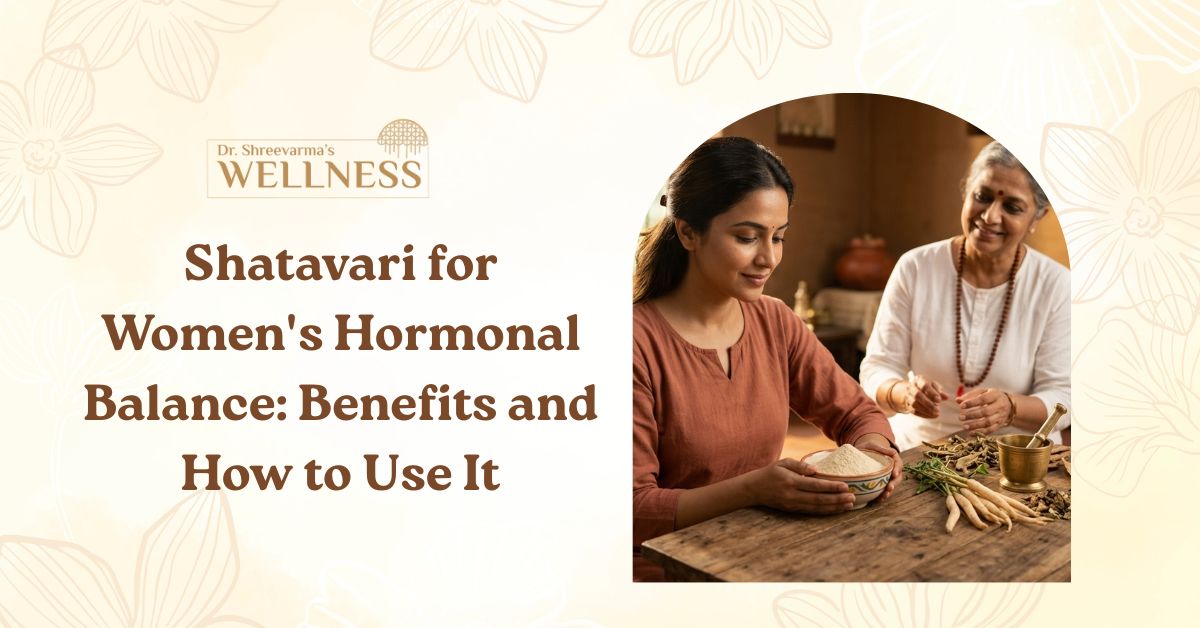
For centuries, Ayurveda has turned to one root above almost all others when it comes to women's health: Shatavari (Asparagus racemosus). Its Sanskrit name translates loosely to "she who possesses a hundred husbands" — a nod to the vitality, fertility, and reproductive strength it was traditionally believed to support. Today, as more women look for natural ways to manage hormonal fluctuations, irregular cycles, and reproductive wellness, Shatavari benefits for women are gaining renewed attention in modern wellness circles.
This guide explores what Shatavari is, how it supports hormonal balance, its role in PCOS and fertility, and how to use it correctly — along with when it's worth speaking to a specialist.
What Is Shatavari?
Shatavari is a climbing, herbaceous plant native to India and parts of Asia, and its roots are the primary part used in Ayurvedic formulations. Classified as a rasayana (rejuvenator) in Ayurvedic medicine, it is considered one of the most important Ayurvedic herbs for women's health, traditionally used across every life stage — from menstruation to pregnancy, postpartum recovery, and menopause.
Shatavari contains steroidal saponins called shatavarins, along with antioxidants, flavonoids, and mucilage, which are believed to contribute to its adaptogenic and phytoestrogenic properties.
Shatavari Benefits for Women
1. Supports Hormonal Balance
One of the most well-known Shatavari benefits for women is its traditional use as a hormone-balancing herb. Its phytoestrogenic compounds are believed to gently support estrogen activity in the body, which may help ease symptoms linked to hormonal fluctuations such as mood swings, irregular cycles, and hot flashes.
2. Eases Menstrual Discomfort
Shatavari is traditionally used to help regulate menstrual cycles and reduce cramping, bloating, and discomfort associated with periods.
3. Supports Menopause Transition
As estrogen levels decline during perimenopause and menopause, Shatavari is often recommended in Ayurveda to help ease hot flashes, mood changes, and vaginal dryness.
4. Promotes Reproductive and Fertility Health
Shatavari for PCOS and fertility is a growing area of interest. The herb is traditionally believed to nourish reproductive tissues, support healthy ovulation, and improve uterine health, making it a common recommendation for women trying to conceive.
5. Supports Lactation
Shatavari is one of the most recommended herbs for new mothers, traditionally used as a galactagogue to support healthy breast milk production.
6. Boosts Immunity and Vitality
As a rasayana herb, Shatavari is believed to strengthen overall immunity, reduce fatigue, and build resilience to stress — important for women juggling demanding schedules alongside hormonal shifts.
7. Supports Gut and Digestive Health
Shatavari's mucilage content is traditionally used to soothe the digestive tract, which can be especially helpful for women experiencing bloating around their cycle.
Shatavari for Hormonal Balance: Why It Works
The core reason Shatavari is prized as an Ayurvedic herb for women's health lies in its adaptogenic nature — it doesn't force the body in one direction but helps it adapt and self-regulate. For hormonal balance, this means:
- Supporting the body's natural estrogen activity during low-estrogen phases (like menopause)
- Calming the nervous system, which indirectly supports the hypothalamic-pituitary-ovarian (HPO) axis that governs hormone production
- Reducing cortisol-related stress that can disrupt menstrual regularity
This makes Shatavari for hormonal balance relevant across PCOS, PMS, perimenopause, and general cycle irregularity.
Shatavari for PCOS and Fertility
Polycystic Ovary Syndrome (PCOS) affects a significant number of women of reproductive age and is often linked to insulin resistance, elevated androgens, and irregular ovulation. In Ayurvedic practice, Shatavari for PCOS and fertility is used to:
- Support hormonal regulation alongside diet and lifestyle changes
- Nourish reproductive tissues (shukra dhatu in Ayurveda)
- Ease stress, which is often an aggravating factor in PCOS
It's important to understand that Shatavari is a supportive herb, not a standalone cure for PCOS. It works best when combined with a personalized Ayurvedic protocol, proper diet, and — where appropriate — conventional medical guidance.
How to Use Shatavari
There are several traditional and modern ways to incorporate this herb:
- Shatavari Powder (Churna): The most common form — typically ½ to 1 teaspoon mixed with warm milk, water, or ghee, taken once or twice daily.
- Shatavari Capsules/Tablets: A convenient, standardized option for those who prefer not to take the powder directly.
- Shatavari Kalpa: A sweetened herbal preparation often recommended for lactation and reproductive support.
- Shatavari Tea: Root pieces steeped in hot water, often combined with other cooling herbs.
- Combination Formulations: Often blended with herbs like Ashwagandha, Licorice, or Aloe Vera depending on the specific concern being addressed.
General guidance:
- Best taken on an empty stomach in the morning or before bed, unless advised otherwise
- Often paired with warm milk or ghee in Ayurveda, believed to enhance absorption
- Dosage varies based on age, constitution (dosha), and health condition
Precautions to Keep in Mind
- Shatavari has estrogen-like activity, so women with estrogen-sensitive conditions should use it only under professional guidance
- Not recommended without medical supervision during certain stages of pregnancy
- May interact with hormone therapies or diabetes medications
- Quality and sourcing matter — always choose a trusted, standardized formulation
Why Professional Guidance Matters
While Shatavari is widely regarded as safe when used appropriately, hormonal health is deeply individual. What works for one woman's cycle, dosha constitution, or PCOS presentation may not suit another. A personalized assessment ensures the right form, dosage, and complementary herbs are chosen for your specific needs.
If you're dealing with irregular cycles, PCOS, fertility concerns, or menopausal symptoms, it's worth consulting an experienced Ayurvedic women's wellness doctor near you, such as Dr. Shreevarma's Wellness, for a proper diagnosis and a customized Shatavari protocol rather than self-medicating based on generic advice.
Conclusion
Shatavari remains one of Ayurveda's most trusted herbs for women's reproductive and hormonal health — supporting everything from menstrual regularity and PCOS management to fertility, lactation, and the menopause transition. Used correctly and under expert guidance, it can be a valuable addition to a woman's wellness routine at nearly every life stage.
FAQs
Q1. How long does it take to see results from Shatavari? Most Ayurvedic practitioners suggest consistent use for 8–12 weeks before noticeable changes in hormonal symptoms.
Q2. Can Shatavari help with irregular periods? Yes, it's traditionally used to support cycle regularity, though underlying causes should be evaluated by a professional.
Q3. Is Shatavari safe during pregnancy? It should only be used during pregnancy under the supervision of a qualified Ayurvedic doctor.
Q4. Can Shatavari be taken with other supplements? It's often combined with herbs like Ashwagandha or Licorice, but combinations should be personalized by a practitioner.
This article is for informational purposes only and is not a substitute for professional medical advice. Please consult a qualified Ayurvedic or healthcare practitioner before starting any new herbal supplement.


Shilajit resin —
This was an interesting read, especially the way the article explains the traditional Ayurvedic use of Shatavari and the importance of personalized guidance. I liked the point that herbal wellness should be considered alongside a balanced diet and healthy lifestyle rather than as a quick solution. Ayurveda has many traditional herbs and rejuvenating practices that focus on supporting overall vitality. I recently came across this Ayurvedic wellness product for men that may also be worth exploring: https://greenmilkconcepts.in/products/shilajit-resin-ayurvedic-rejuvenation-men-s-wellness-support